Project details
- Project: Loan Application UX Design
- Role: UI/UX Designer
- Duration: Feb – Aug 2016
- Team Size: 5
The Loan Application UX Design project aimed to streamline the user journey for Financepeer’s loan application process, reducing the time and friction involved in applying for educational loans. This project focused on improving the user experience by designing a more intuitive and responsive loan application form.
Key areas of focus included user research to identify pain points, designing wireframes and prototypes, and implementing a responsive design that ensures a seamless experience across devices. Collaboration with the development team was crucial to align the design with technical constraints.
Conducted extensive user research to identify pain points in the existing loan application process, gathering insights that guided the design of the new form.
Designed wireframes and high-fidelity prototypes for the loan application form, focusing on a streamlined and user-friendly interface.
Implemented a responsive design to ensure a seamless user experience across devices, making it easy for users to apply for loans on both desktop and mobile.
User Research & Analysis
Ideate
Design Solution
Prototyping
Testing
The project began with thorough research and analysis to identify the key pain points in the existing loan application process. User interviews, surveys, and competitive analysis were conducted to gather insights that informed the design of the new application form.
User Interviews
Conducted interviews with users to understand their frustrations and expectations when applying for loans.
Surveys
Distributed surveys to gather quantitative data on user experiences with the loan application process.
Competitive Analysis
Analyzed competitor loan application platforms to identify best practices and areas for improvement.
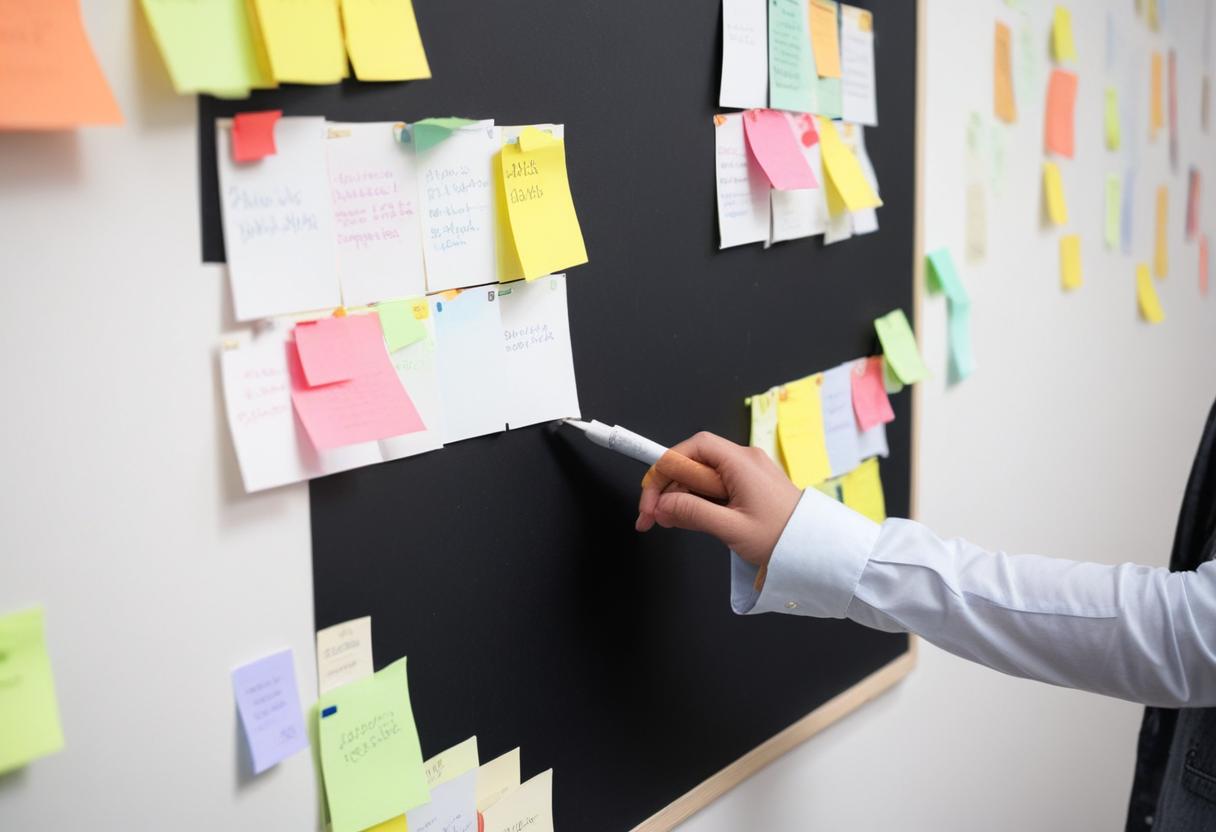
Faced with the new focused challenge, I facilitated a design sprint to generate ideas to make the loan application process easy. My team and I brainstormed various design opportunities, then grouped similar ideas and voted on them based on key insights from our user research to identify the most effective design solutions. Through our ideation process, we developed four concepts. To ensure we selected the solution with the greatest impact and the least effort, we evaluated each idea against criteria derived from our interview research findings and voted accordingly.
The design solution for the loan application process focused on simplifying the user journey and making the application form more intuitive and responsive. Key elements of the solution included a clean and user-friendly interface, easy navigation, and clear instructions at each step of the process.
Wireframes
Created wireframes that laid out the structure and flow of the loan application form, ensuring ease of use.
Prototypes
Developed high-fidelity prototypes to visualize the final design and gather user feedback.
Responsive Design
Implemented responsive design principles to ensure that the application form worked seamlessly on all devices.
Intially we created Low fidelity prototype ,took feedabck from stakehodlers and then made iterations necessary. Later High-fidelity prototypes were created to visualize the new loan application form. These prototypes were tested with users to gather feedback and ensure that the design met their needs.
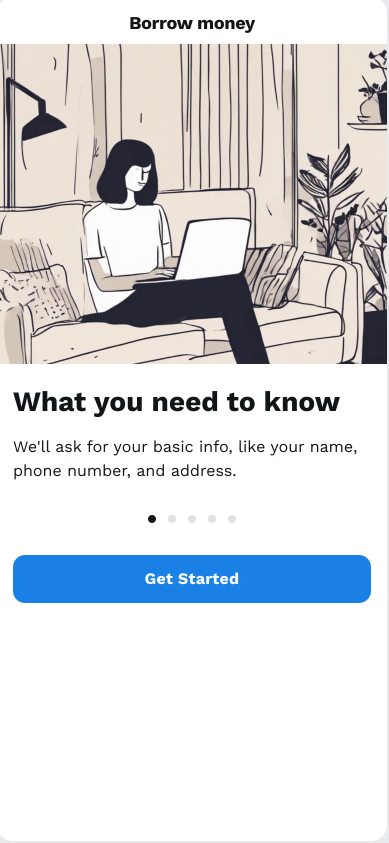
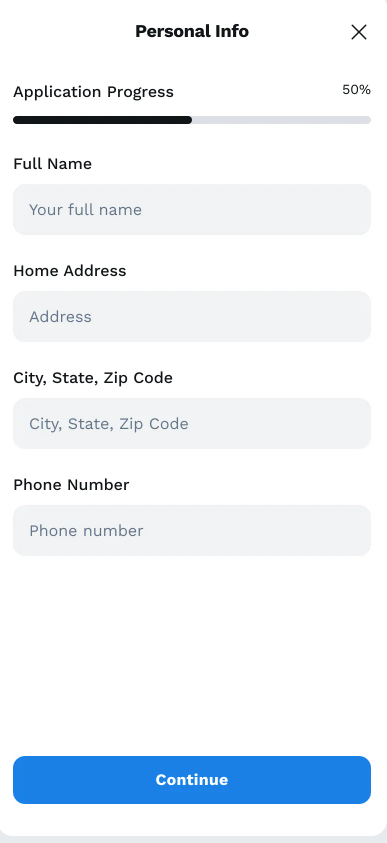
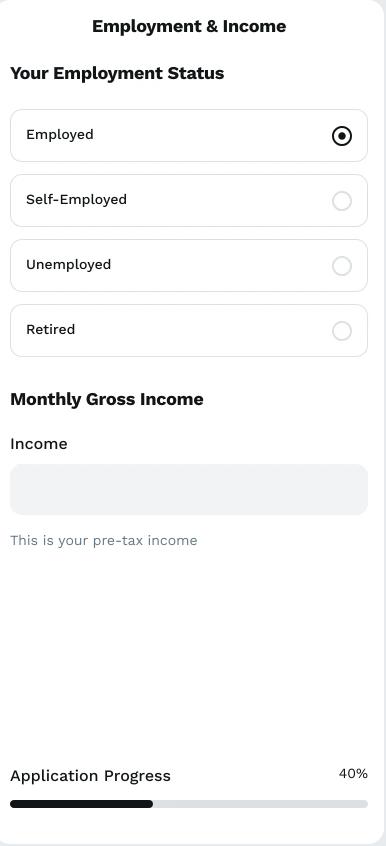
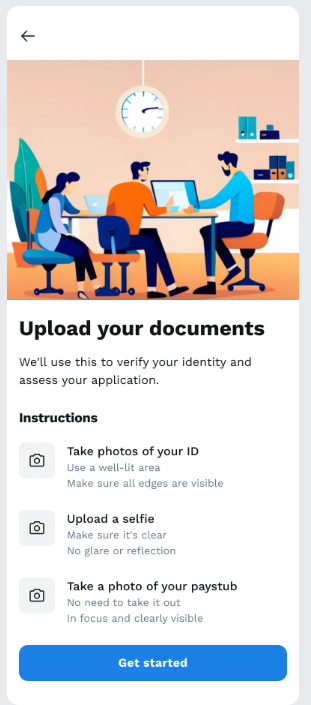
The loan application form underwent several rounds of testing with real users. Feedback from these sessions was used to refine the design, making the form more intuitive and responsive. A/B testing was also conducted to optimize the user flow, leading to a 40% increase in loan application completions.


With more time, I would have further refined the loan application form by exploring additional features like personalized loan offers and integration with credit scoring systems.
This project reinforced the importance of user-centered design and the value of iterative testing and refinement to create a product that meets user needs effectively.