Project details
- Project: UI/UX Design
- Role: UX/UI Designer & Developer
PartRunner is a dynamic startup based in Boston, MA, providing an On-Demand delivery service for home service contractors and supply houses. The platform allows users to request deliveries for any orders they need to be fulfilled quickly and efficiently.
Our goal was to redesign the PartRunner website and mobile application to enhance usability, reduce user frustration, and ensure the platform effectively meets the needs of its users. We focused on updating the user interface to make it more intuitive, responsive across devices, and capable of handling high volumes of delivery requests seamlessly.
I played a key role in shaping the user interface by creating style guides, designing UI components, and developing wireframes and high-fidelity prototypes. These efforts were aimed at creating a seamless and intuitive experience for PartRunner's users.
I conducted extensive research and interviews with PartRunner's users to understand their needs and pain points. This research was critical in guiding the design process and ensuring that the final product met user expectations.
I managed the project timeline, facilitated team meetings, and ensured that all team members were aligned on our goals. Clear communication was key to the success of this project.
One of the main challenges was to streamline the delivery request process, making it more accessible and less time-consuming for users. Additionally, we needed to ensure that the platform could handle a large volume of delivery requests efficiently.
Another challenge was to design a system that allowed managers to easily track and manage deliveries while ensuring that the interface remained user-friendly and responsive across devices.
Research & Empathy
Define the Problem
Ideate
Prototype
Test & Iterate
To identify the obstacles that users encountered when requesting deliveries, I conducted several user interviews. These sessions revealed that many users struggled with the platform’s complexity, which often led to frustration and inefficiencies.
Our research highlighted three major pain points: limited time to place delivery requests, difficulty navigating the platform, and a lack of real-time updates. Addressing these issues was key to improving the overall user experience.
Time Constraints
Users often had limited time to accurately place delivery requests due to their busy schedules.
Complex Platform
The existing platform was cumbersome and difficult to navigate, leading to frequent errors.
Lack of Real-Time Updates
The platform did not provide real-time updates, making it harder for users to manage their deliveries effectively.
Given the challenges we identified, our team participated in a series of ideation sessions, using the Crazy 8 method to quickly generate and explore potential solutions. We focused on making the platform more intuitive and user-friendly.
Through this process, we developed several key concepts, which we then evaluated based on their potential impact and feasibility. We ultimately selected the solution that offered the most significant improvements to the user experience while remaining practical to implement.
Our final design solution centered on simplifying the user interface. We streamlined the process for requesting deliveries, making it easier for users to place orders quickly and efficiently. This solution also included improved navigation and real-time updates.
User-Friendly Design
An intuitive interface that simplifies the delivery request process for all users.
Increased Efficiency
A platform that improves accuracy and reduces the time required to place and manage delivery requests.
Real-Time Updates
Integration with real-time tracking tools to streamline the delivery process and provide timely updates.
To validate our design solution, I created a high-fidelity prototype, which we used for initial user testing. This allowed us to gather feedback early in the process and make necessary adjustments to better meet the needs of PartRunner's users.
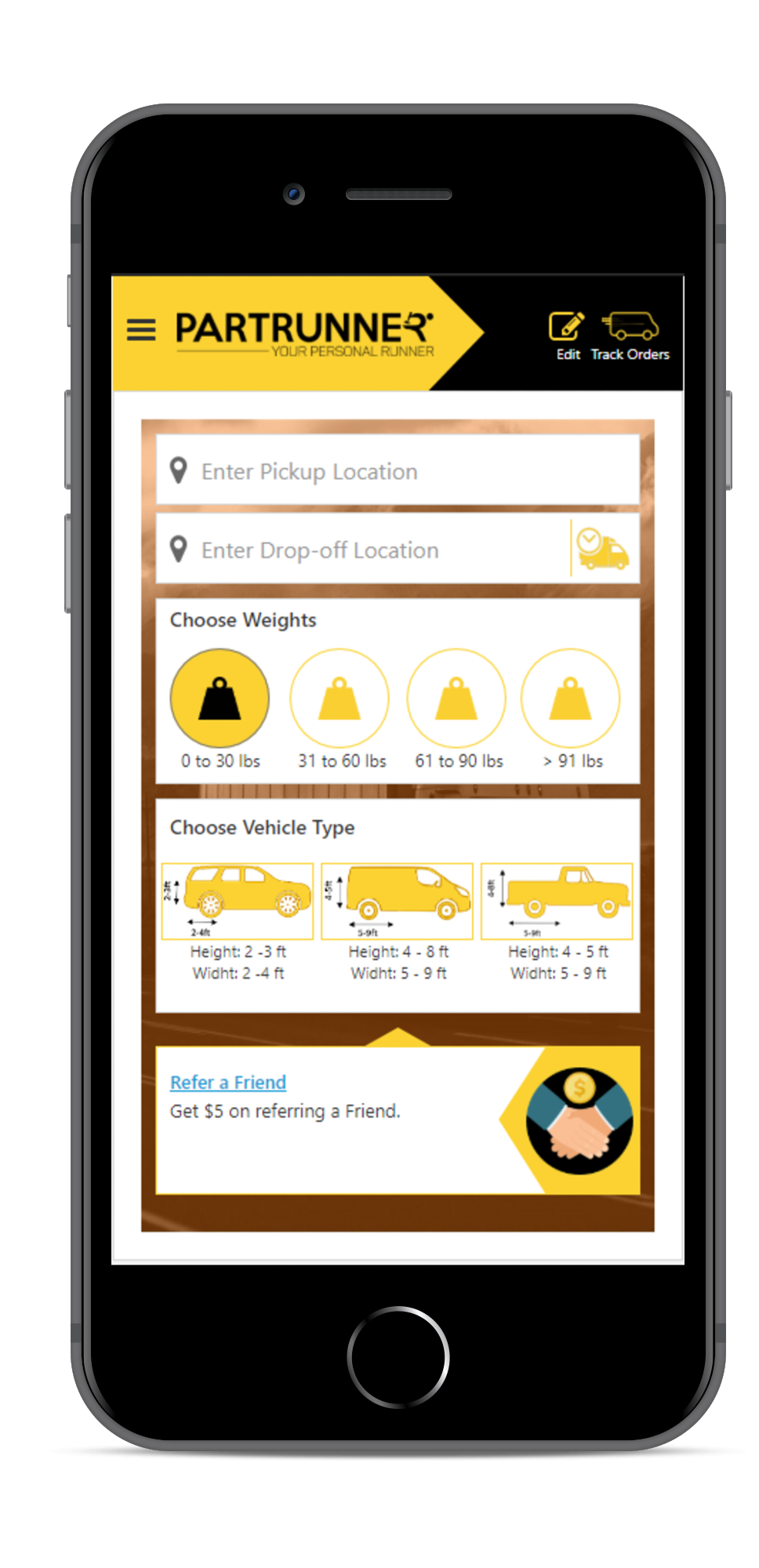
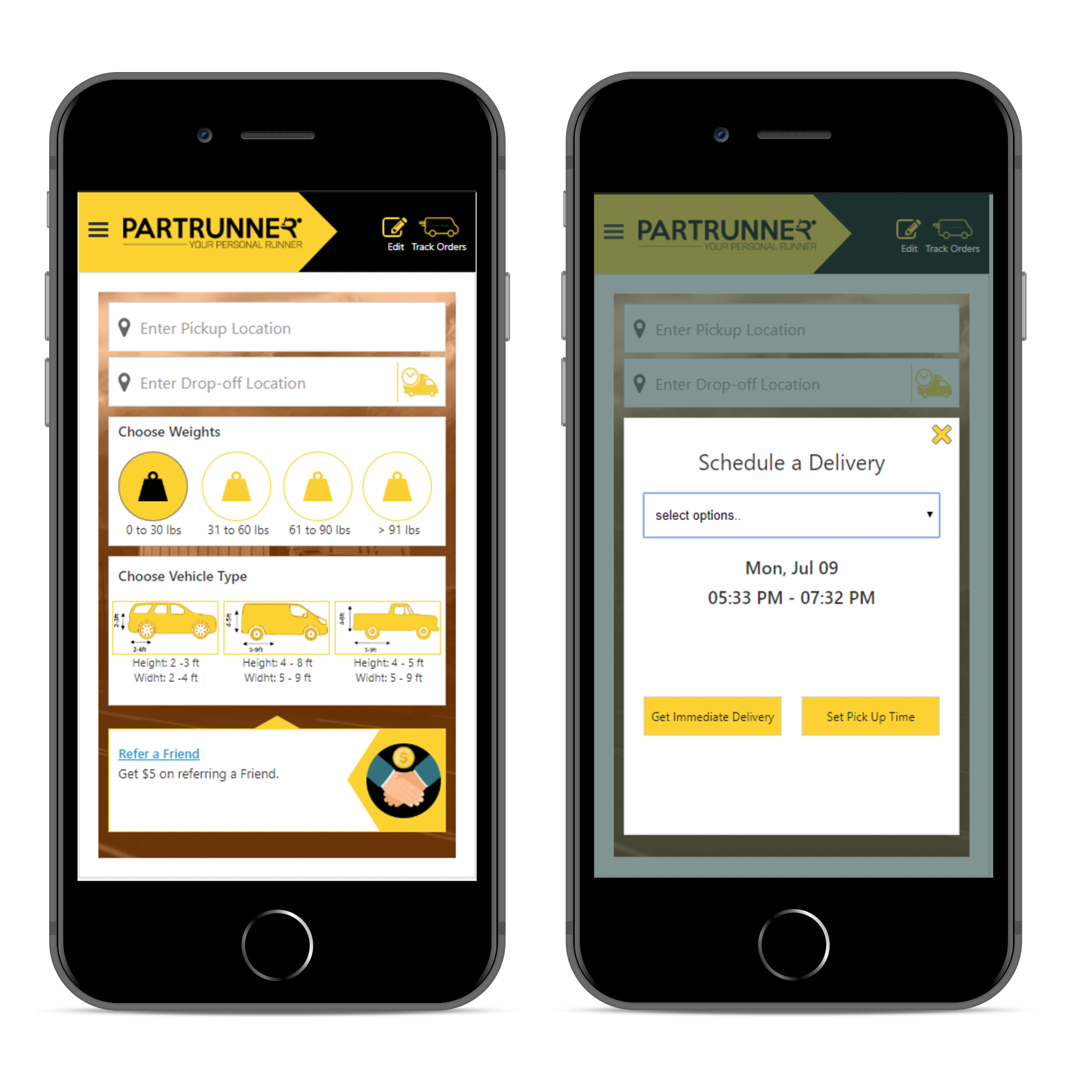
Based on user feedback, we removed a complex feature that had initially been included in the design. Users found it overwhelming and preferred a simpler, more streamlined approach. We refined the platform to focus on essential features, which improved overall usability.
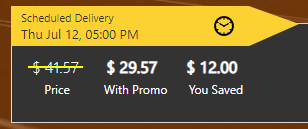
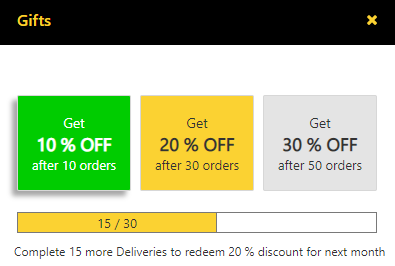
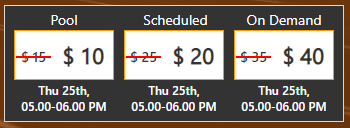
A part of the design is to implement promotional features like discounts and other offers on the apps. Here are snippets of the some ideas we brainstormed on.
Streamlined Delivery Request
A simplified interface that makes it easy for users to quickly request and manage deliveries.
Improved Tracking
An efficient tracking system that provides real-time updates while remaining user-friendly.
Responsive Design
A responsive design that ensures users can easily access the platform from any device, improving accessibility and usability.
With additional time, I would have focused on conducting further user testing and refining the design based on specific feedback. This would have ensured an even more user-centered final product.
This project underscored the importance of clear communication and iterative design. By continually refining our approach and integrating user feedback, we were able to develop a more effective and user-friendly platform.